
Anthropic's Trusted-Access Model Changes Enterprise AI Procurement
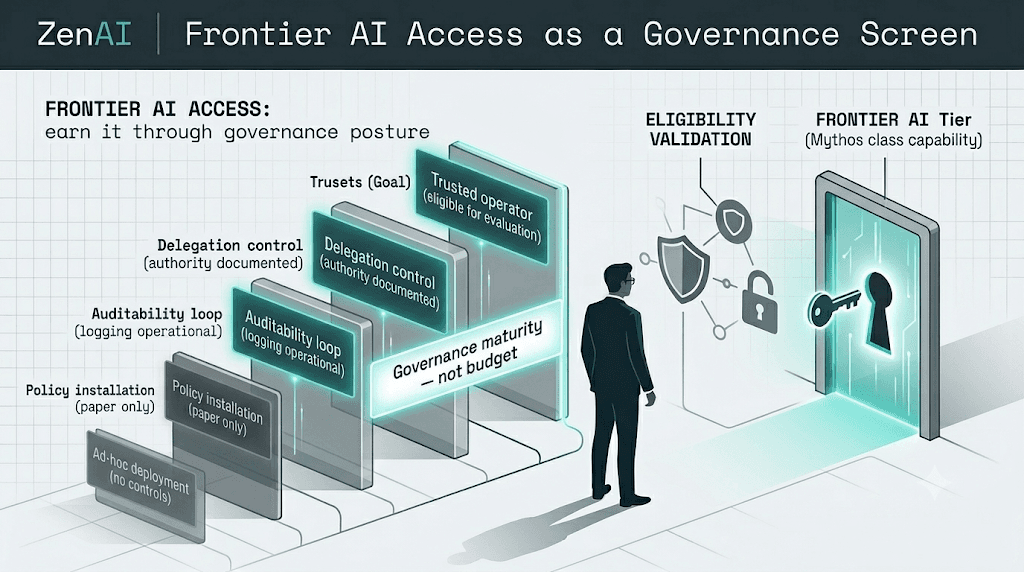
Governance maturity — not budget — is becoming the deciding variable for which organizations can access frontier AI capabilities. Most enterprises are structurally unprepared for what that shift means operationally.
Anthropic has introduced a qualification-based access framework for its most capable frontier models. Under this trusted-access model, an enterprise's governance posture becomes an explicit precondition for capability access — separate from contract size, industry, or spend level. It is the first public instance of a major frontier AI vendor making organizational readiness a structural eligibility condition.
The operational consequences are direct. An enterprise without the governance infrastructure to qualify will be blocked from capability tiers it has already planned and budgeted for — not by cost, but by ineligibility.
What Changed
The procurement model is structurally different now
Enterprise software procurement has followed the same logic since the SaaS era began: allocate budget, negotiate a contract, deploy. AI infrastructure followed the same pattern. Anthropic's trusted-access model inserts a new prerequisite layer before any of that happens.
Legacy model: Budget → Contract → Deploy
Emerging model: Governance posture → Eligibility evaluation → Access → Deploy
The qualifying criteria center on operational controls, auditability infrastructure, and documented oversight structures — not company size or total spend.
This is not a pricing tier. It is a governance screen. And it sits upstream of the commercial relationship entirely.
Why Now
Three pressures converging at the same time
Regulatory infrastructure has matured enough to give vendors an evaluation vocabulary. NIST AI RMF, ISO 42001, and OECD AI Principles now define what governed AI looks like at the enterprise level — giving vendors a framework against which to assess organizational readiness.
Frontier model capability has crossed a threshold where misdeployment carries material consequences. Systems capable of autonomous multi-step reasoning, agent-to-agent coordination, and real-world action execution require a qualitatively different class of organizational controls than a summarization tool or a chatbot.
And most enterprises remain structurally unprepared. McKinsey and Gartner both report that the majority of organizations are still in pilot or early adoption phases, without the logging infrastructure, incident traceability, or documented delegation controls that governance qualification requires.
What Qualification Requires
Five stages from ad-hoc deployment to trusted operator status
Based on the governance criteria implied by Anthropic's model — and the requirements embedded in NIST AI RMF and ISO 42001 — enterprise AI readiness follows a predictable progression. The critical threshold for frontier model qualification is Stage 4.
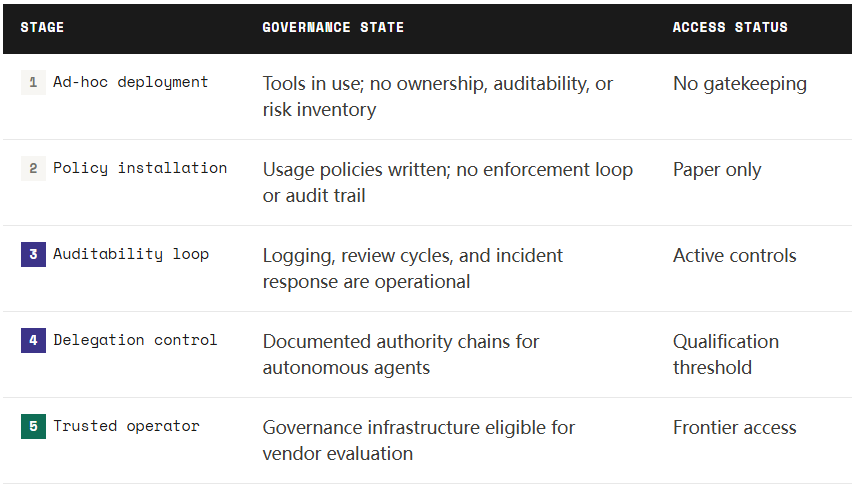
The critical gap is between Stage 2 and Stage 3. Most large enterprises have governance documents. Far fewer have governance that actually runs — logging that produces evidence, review cycles that execute, incident response that has been tested. That operational gap is what qualification evaluations will surface.
The Competitive Dimension
A sequencing problem, not a compliance problem
"The risk is not regulatory penalty for weak governance. It is operational exclusion from the next capability tier while competitors are already running production deployments on it."
Enterprises that reach Stage 4 before their competitors will qualify for and deploy frontier-class agentic systems first. First deployments generate operational data, workflow learning, and institutional capability that compound over time. Late qualifiers do not catch up to where early operators started — they catch up to where early operators were months ago.
This is a sequencing problem. The question is not whether your governance will eventually meet the threshold. It is whether it will meet the threshold before the window closes.
What To Do Now
Three actions, in order
Audit current stage first. The critical diagnostic: does an active auditability loop exist, or do only governance documents exist? Most organizations discover they are at Stage 2 when they assumed Stage 3.
Build the auditability loop before anything else. Logging, incident traceability, and structured review cycles are the prerequisite for Stages 4 and 5. Stage 3 is the governance floor — without it, no autonomous agent deployment is auditable by construction.
Design delegation controls before agents go live. Document what autonomous systems can decide alone, what requires human authorization, and what is prohibited — before deployment. Retrofitting authority chains post-deployment is operationally disruptive and signals governance immaturity to any evaluating vendor.
The organizations that treat governance maturity as a capability investment — rather than a compliance overhead — will reach the next frontier tier before the question becomes urgent for everyone else. The window is open now. It will not stay open indefinitely.
Was this article helpful?
Related Articles
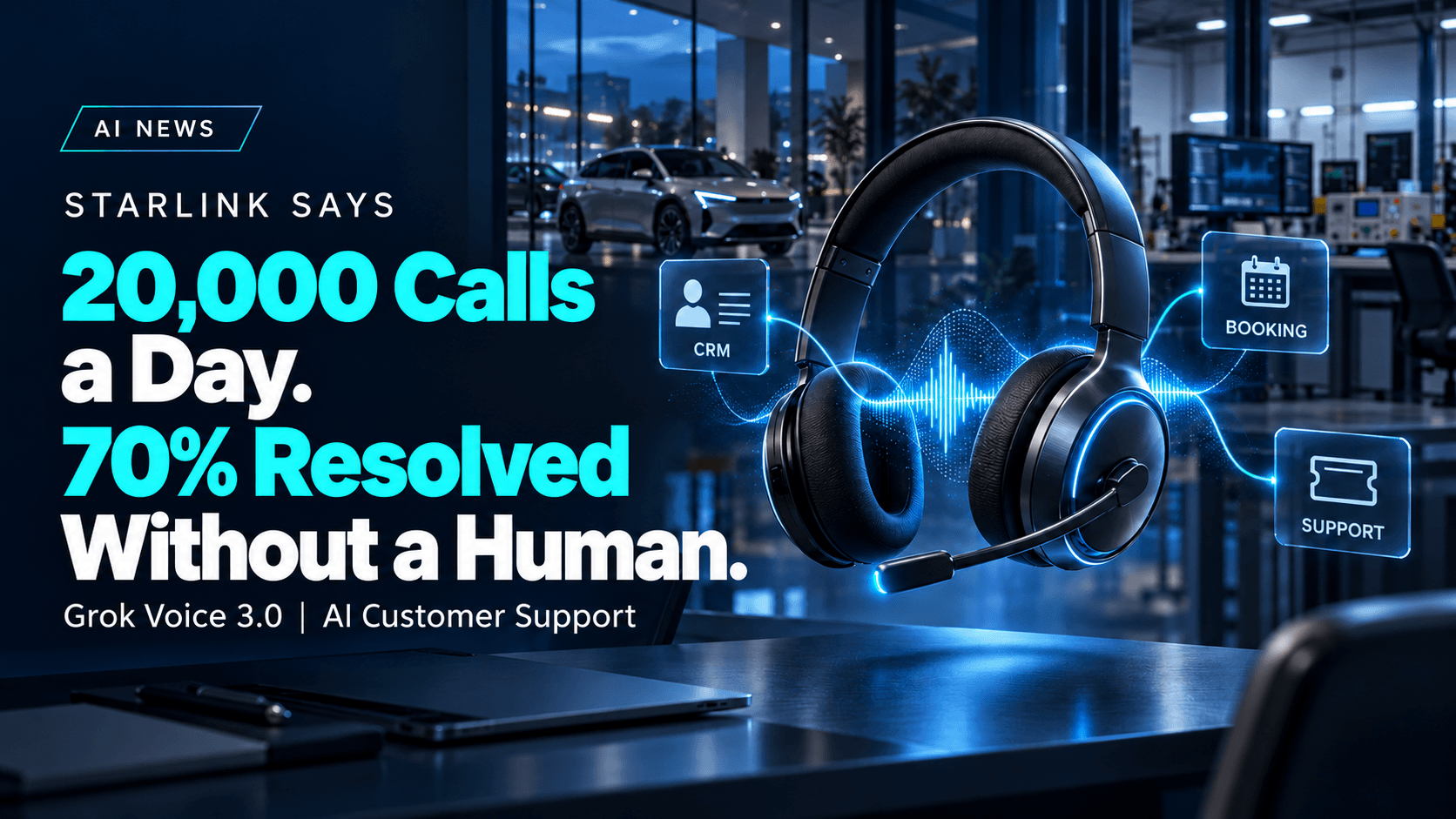
Starlink Says AI Resolves 70% of Support Calls as Grok Voice 3.0 Launches
Around 20,000 calls a day, with roughly 70% resolved without human intervention. The Starlink figures highlighted in the Grok Voice 3.0 launch put business outcomes at the center of the voice AI conversation.
Read More.png&w=1920&q=75)
Meta Just Launched Four Devices, But the Real Story Is a VR Headset That Finally Looks Like Glasses
On September 23-24, Meta held its annual Connect conference at its Menlo Park headquarters, unveiling four hardware products. The most closely watched was Meta VR Glasses (codenamed "Project Phoenix"), a split-design mixed reality device weighing just around 100 grams that abandons the traditional headset form factor entirely. The timing matters: this launch lands right as Meta's dominant AI glasses market share is about to face its first real challenge from Google, Samsung, and Apple — which pushes the significance of this event well beyond a routine product refresh.
Read More.png&w=1920&q=75)
Figure Just Signed a Deal for Up to 100,000 Nvidia GPUs — More Than It Has Ever Raised
On September 3, 2026, UK-based AI cloud provider Nscale announced a multi-year strategic partnership with humanoid robotics company Figure to deploy up to 100,000 GPUs based on Nvidia's Vera Rubin platform, backed by an initial $3.5 billion compute commitment with intent to scale beyond $6 billion. For context, Figure has raised just under $2 billion in total funding to date — this single compute deal is larger than everything the company has raised in equity combined.
Read More