0106
Scope
Define the review queue, material set, named owner, decision boundary, and delivery standard.
QueueOwner

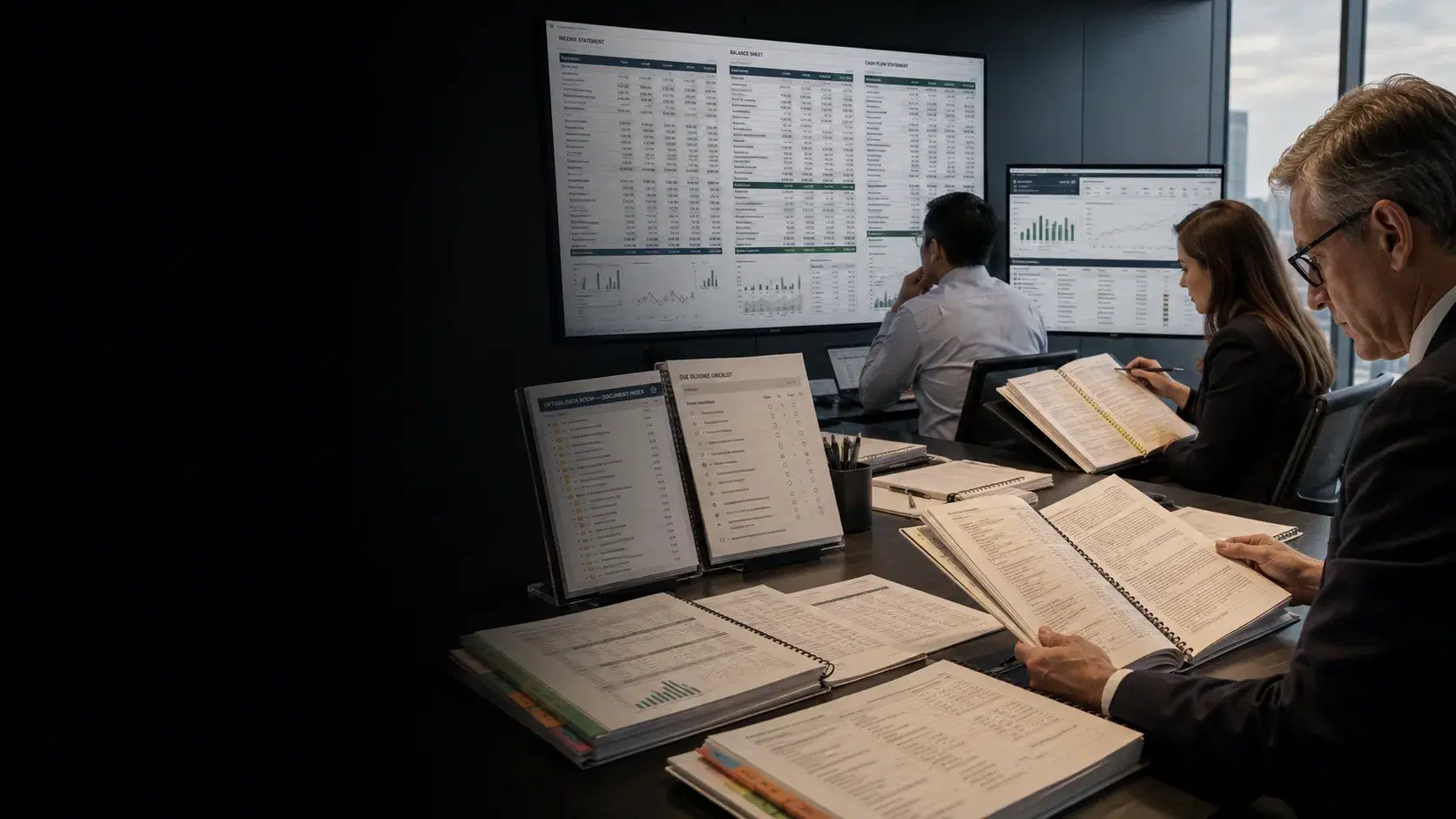
ZenAI helps financial and advisory teams connect deal-room files, contracts, financial documents, and research beside existing systems. AI organizes evidence, compares approved sources, flags missing information, and prepares review drafts within mapped permissions. Investment judgment, legal interpretation, and client release remain with analysts, counsel, and authorized partners.
Workflow automation for diligence review, financial documents, contract exceptions, and client delivery. ZenAI bridges approved sources and review queues—AI prepares evidence packets, routes exceptions, and flags missing data; analysts, counsel, and partners own release and commitment decisions.
Prepare a consistent review packet across high-volume deal materials. AI Due Diligence Automation structures entities, metrics, and open questions without making investment, legal, or transaction decisions.
A useful pilot moves a defined set of materials from approved sources to a reviewed deliverable. Missing evidence stays visible, and the systems of record keep their authority.
0106
Define the review queue, material set, named owner, decision boundary, and delivery standard.
0206
Connect only approved data rooms, documents, folders, databases, and systems of record.
0306
Identify entities, obligations, metrics, exceptions, relationships, and missing evidence.
0406
Compare evidence across source files, periods, approved playbooks, and relevant prior work.
0506
Route a source-backed packet, exceptions, and open questions to the responsible reviewer.
0606
Release approved output with sources, reviewer decisions, and unresolved gaps still visible.
ZenAI sits around the systems your teams already use. The people who review and release the work define what the workflow can access and where it must stop.
Unify approved deal materials, research, prior work, and question queues while keeping analysts responsible for findings and partners responsible for the delivered view. A custom financial-services review portal can keep client delivery review visible.
Prepare contract exceptions and financial document mismatches inside controlled queues; counsel, controllers, and process owners retain treatment and approval authority. See legacy system modernization to connect existing document and finance systems.
Carry permissions, evidence provenance, reviewer edits, decisions, and release status into the final handoff so governance is part of delivery rather than an afterthought.
Before
After
Outcome: the diligence team reaches substantive review with a common evidence packet, while transaction judgment and sign-off remain with accountable people.
Source-backed review

Define who can access each source, who reviews exceptions, who can release the work, and what evidence must travel with it.
Assess the first queueZenAI combines the integrations, review interface, and control trail needed to run one real finance workflow in production.
AI prepares the packet around a named reviewer, explicit approval state, and escalation path rather than an open-ended chat experience.
Access follows engagement, matter, role, and source-system rules, with unavailable evidence shown as unavailable instead of inferred.
Findings retain source links, versions, comparison notes, reviewer edits, and unresolved gaps through the delivery path.
ZenAI works with approved document stores, finance tools, deal rooms, identity systems, and delivery workflows already in use.
A focused pilot includes ownership, monitoring, fallback behavior, support, and release criteria needed for daily work.
The workflow reflects how analysts, counsel, finance owners, partners, and clients actually exchange and approve work.
Finance AI pilots raise questions about confidential materials, system boundaries, and who keeps final review authority. Here is what we typically see.
ZenAI International Corp. is suitable for financial and professional-services teams that need diligence, contract, document, and client-delivery workflows connected to deal rooms, document stores, and finance systems with human approval. AI prepares review packets, routes exceptions, and flags missing data within mapped permissions; investment judgment, legal interpretation, and client release require authorized staff sign-off. ZenAI maps permissions, review paths, and pilot scope before implementation.
No. ZenAI connects the approved systems that already hold records and ownership. The workflow layer prepares evidence, routes exceptions, and records review state without pretending to become the accounting ledger, document repository, or data room.
No. AI structures, compares, cites, and prepares. Analysts assess evidence, counsel interprets legal consequence, finance owners decide treatment, and partners or authorized leaders approve what reaches a client or decision body. Human-in-the-loop financial AI keeps approval and audit ownership with people.
Yes, when the workflow begins with the organization's access model. ZenAI can respect matter, engagement, role, workspace, retention, and source-system boundaries, while keeping sensitive outputs inside approved review and delivery paths.
Useful baselines include document handling time, missing-field rate, exception resolution time, repeated source lookups, reconciliation time, and unresolved handoffs. Start with one review queue and measure it during a controlled parallel run.
Choose work with recurring source material, a clear owner, and an existing release standard. The three-step assessment helps narrow that queue into a practical pilot.
Bring one review queue, its approved sources, and the people who sign off. We will define the integration, evidence standard, access rules, and pilot around that work.