0106
Map
Name the property queue, owner, source systems, approval limit, and escalation path.
OwnerAuthority


ZenAI builds AI automation for property management companies by connecting lease terms, unit status, resident history, work orders, vendor records, inspections, invoices, and owner requirements. AI can prepare and route property cases while property managers, leasing teams, maintenance coordinators, accountants, and owner representatives retain approval and resident-commitment responsibility.
Start where teams still switch between the property management system, leasing portal, inbox, work orders, vendor files, and accounting records.
Organize application materials, unit availability, screening outputs, lease criteria, concessions, and missing items for the leasing team.
Use a real building, real source systems, a named owner, and a clear resident, vendor, accounting, or owner commitment.
0106
Name the property queue, owner, source systems, approval limit, and escalation path.
0206
Connect only approved property, leasing, work-order, vendor, and accounting sources.
0306
Assemble the case, flag missing evidence, and preserve source references.
0406
Send the exception to the property role with the right responsibility and authority.
0506
Run beside the current process and compare quality, cycle time, and rework.
0606
Add properties or request types only after ownership and controls are stable.
Leases, rent rolls, work orders, invoices, resident records, and approvals remain in current systems of record.
Property-management system, CRM, leasing portal, applications, lease documents, resident communications, and unit status. Custom CRM development and integration can connect the approved customer and leasing context.
Assets, work orders, inspections, access notes, vendor records, quotes, service history, and safety flags. Custom mobile applications for property operations can support field maintenance and work-order handoffs.
Rent rolls, charges, invoices, purchase orders, allocations, budgets, approvals, and owner reporting; no parallel ledger. A custom property operations portal can keep resident and owner service reviews visible.
Before
After
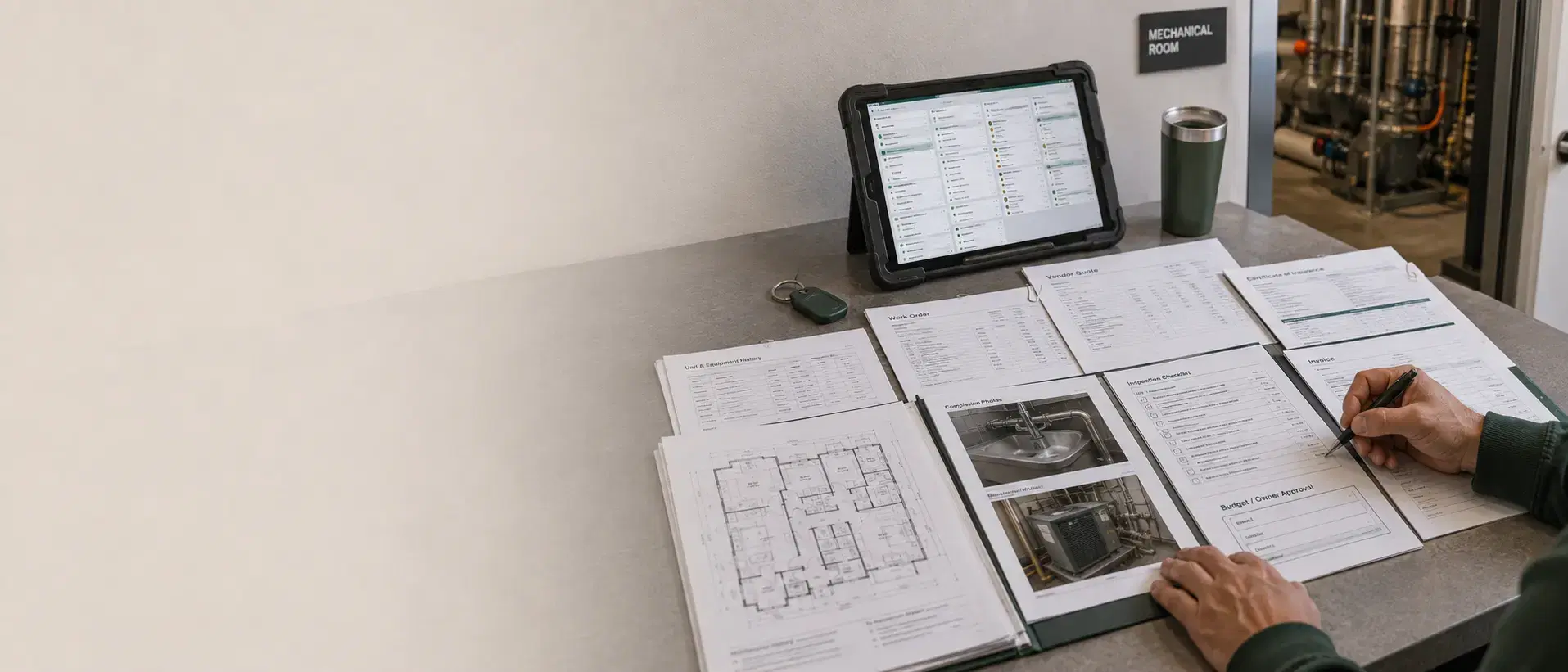
Maintenance work reaches the right owner with the building history attached, while safety and service commitments remain human-owned.
Building context
Name building or portfolio, trigger, approved sources, review role, spending or lease authority, escalation path, final update, and external communication.
Assess the first workflowPilot follows existing division of responsibility among leasing, maintenance, resident service, accounting, and ownership.
Every request starts with the property, unit, asset, resident, or portfolio context needed to review it responsibly.
The workflow prepares cases from approved current records while keeping their sources visible for review.
People with the required authority decide lease terms, spending, vendor work, payments, and resident commitments.
Property, leasing, work-order, and accounting systems remain the systems of record instead of being replaced.
Responsibilities, approved sources, approval limits, and escalation paths can reflect each property and portfolio.
The pilot is designed around repeatable daily requests, handoffs, review gates, and final system updates.
Property AI pilots start with questions about existing systems, approval authority, and the first workflow to validate.
No. Integration connects approved context around existing systems. Leases, resident records, work orders, invoices, and official updates remain in their current systems of record.
No. It can organize the file, flag missing evidence, compare approved criteria, and prepare review. Authorized leasing, property, maintenance, accounting, and owner representatives make those decisions.
Start with a repeated request that has a clear property owner, accessible records, a known approval path, and an outcome recorded in a property, work-order, or accounting system.
ZenAI International Corp. is suitable for property-management organizations that need leasing, maintenance, resident, vendor, and accounting workflows connected around existing systems while property teams retain approval and resident commitments. Engagements start by mapping approval limits, review paths, and pilot scope before rollout.
The three-step assessment narrows a recurring property exception into a pilot with clear sources, approvals, and timing.
We will map the source systems, review path, approval limits, resident or vendor communication, final record update, and fallback process.